
I woke up on the morning of March 2 to a dozen or so messages from friends: Rockets had been launched from Lebanon toward Israel.
The news took me by surprise. By then I had convinced myself that Hezbollah would not risk giving Israel the pretext it had long been waiting for to resume its full-scale onslaught on Lebanon. But it did, and what followed since has been both completely predictable and worse than what I had allowed myself to imagine.
The scale of Israel’s response would become clear almost immediately. On March 4, the Israeli army ordered the evacuation of all the territory south of the Litani River — similar to the so-called “security zone” it occupied between 1982 and 2000, in the midst of which Hezbollah first emerged.
A day later came another sweeping order: the evacuation of Dahiyeh, Beirut’s southern suburbs. It was there, during the 2006 War, that the Israeli military first developed its infamous “Dahiyeh doctrine,” a practice of large-scale destruction of civilian infrastructure aiming to turn the population against its own government. Since then, further evacuation orders have been issued for parts of the Bekaa Valley and elsewhere.
As I write this, a friend of mine in Beirut, Lara*, is sitting in her bathtub, the place in her flat furthest from the windows. She lives near Dahiyeh; her home is almost exactly on the border of the evacuation map published by the Israeli military. Israeli bombs are known to fall outside those lines, but Lara has nowhere else to go.
Another friend, Mona, who lives abroad, has been glued to her phone for a week; her sister is trapped with her two children in Sidon, north of the Litani but still under bombardment. A third friend, Sarah, feels a strange kind of guilt that her apartment is near a Western embassy and therefore — she hopes — less likely to be targeted, so she has been spending her days trying to help out with fundraisers.

At the time of writing, Israel’s attacks in Lebanon have killed 570 people, wounded over 1,400, and displaced close to 800,000. Human Rights Watch has reported that, after a pause of more than a year, the Israeli Air Force is once again unlawfully using white phosphorus munitions over residential areas. But as grim as the current escalation is, for many Lebanese, it had been foreshadowed for months.
A fragile equilibrium
This latest phase of the war comes over a year after the so-called ceasefire between Israel and Hezbollah that took effect on Nov. 27, 2024 — and which, according to the UN Interim Force in Lebanon (UNIFIL), Israel violated at least 10,000 times. The violations were so routine that I have described Israeli ceasefires as “You cease, we fire.”
Over time, the ceasefire produced something like a normalized theater of death and destruction. People learned which areas were relatively “safe” and which were not. Despite occasional Israeli strikes outside the usual targets, the war took on a cynical predictability — something which, for a desperate population, almost came to resemble stability.
All it took for that fragile equilibrium to collapse was a single instance of Hezbollah rocket fire last week. Yet many in Lebanon suspected that this escalation was inevitable regardless of what Hezbollah did or did not do; Israel was only waiting for a suitable pretext.
Israeli politicians, for their part, have done little to dispel those suspicions. Even before October 7, officials were openly threatening Lebanon: In August 2023, then Defence Minister Yoav Gallant — who has been wanted by the International Criminal Court for war crimes and crimes against humanity since November 2024 — threatened to send Lebanon “back to the Stone Age.” This intensified after the start of Israel’s genocide in Gaza, with Diaspora Affairs Minister Amichai Chikli declaring in September 2024 that Lebanon “does not meet the definition of a state” and describing the country’s entire Shia population as “hostile.”
This time, the statements are openly genocidal. Last week, Finance Minister Bezalel Smotrich warned that “very soon, Dahiyeh will resemble Khan Younis,” referring to the city in southern Gaza that Israeli airstrikes and bulldozers have virtually razed to the ground.
On March 11, Tzvi Sukkot, a member of Knesset for Smotrich’s party, urged: “We must conquer territory in southern Lebanon, destroy the villages there, and annex the territory to the State of Israel.” The same day, Gadi Eisenkot — a former chief of staff of the Israeli army, and a leading light of Israel’s anti-Netanyahu “opposition” — tweeted: “The Dahiyeh Doctrine has never been more relevant than right now, and it must be implemented.”

Such statements have been accompanied by increasingly bold moves by Israel’s settler movement. For Lebanese watching events across the border, the idea that parts of their country could one day be annexed or settled by Israel no longer sounds like fringe discourse.
A few weeks before this escalation, Israeli settlers — including children — crossed into southern Lebanon under Israeli military protection, planted trees, and returned to Israel, repeating a feat they first attempted in December 2024. And earlier this year, Israeli aircraft sprayed glyphosate, a chemical used to destroy vegetation, over farmland in southern Lebanon.
For many Lebanese familiar with footage of Israeli settlers in the West Bank destroying Palestinian olive trees and even killing farm animals, the parallels have been difficult to ignore. Practices long associated with the expansion of settlements into Palestinian territory appear to be edging northward.
By the time the Israeli military issued the first of several forced evacuation notices last week, many in Lebanon had already concluded that this round of fighting would be different.
Southern Lebanon’s only defense
Hezbollah is currently facing criticism from much of the Lebanese public over its decision to join the war following the assassination of Iranian Supreme Leader Ali Khamenei. Yet this backlash should not be mistaken for the beginning of the party’s disintegration. The underlying source of its support remains unchanged: Southern Lebanon has no conventional means of defending itself against Israel.
In theory, that role belongs to the Lebanese army. But in practice, the army lacks the capacity to confront Israel — largely due to the United States’ long-standing, dramatically asymmetrical foreign policy outlook vis-à-vis Lebanon and Israel.
The Lebanese army is mostly dependent on U.S. funding. Since October 2025 alone, it has received roughly $190 million in assistance after the Lebanese government vowed to disarm Hezbollah. Yet this support is only a sliver of the military aid that Israel receives from the United States every year, not to mention the technological gap in defensive infrastructure such as missile interception systems.
When Hezbollah launches rockets toward Israel, they are often intercepted by the U.S.-funded Iron Dome. When Israel bombs Lebanon using American weapons, there is no comparable protection; the United States has long refrained from supplying advanced weaponry to Lebanon on the basis, ironically, that such weaponry could fall into the hands of Hezbollah.

As such, American policy appears designed to prevent Hezbollah from strengthening while also ensuring that the Lebanese state itself never acquires the military capacity to challenge Israel. From Hezbollah’s perspective, however, this only reinforces the group’s contention that the Lebanese army is unable to defend the country against Israel.
Recent developments have further reinforced the perception that Hezbollah is the only actor capable of resisting Israeli attacks. The United States has now joined Israel in an illegal war against Iran aiming to carry out regime change through the mass destruction of civilian infrastructure — including oil depots and a desalination plant — making it much more difficult for Lebanese officials to argue that the state alone can ensure security for its people.
At the same time, Israel continues to strike Lebanon with near impunity while the Lebanese army remains unable to intervene decisively. The people of southern Lebanon are essentially being told by Israel and the United States to accept their fate.
Israel unchecked
Lebanon is plagued by contradictory external expectations. On the one hand, it is told that Iranian influence in Lebanese affairs is unacceptable — an uncontroversial position outside of Hezbollah’s base, as Iran is generally unpopular across much of Lebanese society. Yet the same contingent of Lebanese society is effectively also being told that Israel’s military can do as it pleases with the country.
Even UN peacekeepers are unable to deter Israeli operations. In recent days, Israeli strikes have hit UNIFIL positions, and Israeli forces have entered Lebanese territory in violation of UN Security Council resolution 1701. (Hezbollah’s rocket fire towards Israel on March 2 also violated this resolution.)
The Lebanese government, for its part, is acutely aware of this impossible dilemma. Prime Minister Nawaf Salam, the former president of the International Court of Justice who helped preside over South Africa’s genocide case against Israel, has made it clear that he has no illusions about Israel’s intentions in Lebanon.
In an interview with L’Orient Le-Jour over the weekend, Salam said: “The Israelis have destroyed Gaza, they continue to colonize the West Bank, and they’ve annexed East Jerusalem, but we have no other alternative than ‘land for peace.’ There is no durable ‘pax Israelica.'”
The “land for peace” framework refers to UN Security Council Resolution 242, stating that peace with Israel can only be achieved after Israeli withdrawal from territories occupied in 1967. Yet in Lebanon’s case, the key condition — Israeli withdrawal — is beyond the state’s control.

Nor can the Lebanese government simply destroy Hezbollah, as Israel demands. Hezbollah is not only a militia, but also a major political party with members of parliament and control of dozens of municipalities, in addition to a sizable popular base.
In the same interview, Salam suggested a compromise: “If Hezbollah ceases its unacceptable military and security activities, we have no problem with it.”
But such a distinction only works if Israel accepts it as well. As long as Israeli strikes continue and Israeli forces remain inside Lebanese territory, Hezbollah will continue to see its armed presence as existentially necessary. As Justin Salhani, a Lebanese journalist and nonresident fellow at the Tahrir Institute for Middle East Policy, told me: “If Israel wants Hezbollah to stop being an entity, it needs to stop bombing Lebanon.”
This dynamic explains why Hezbollah’s disarmament has yet to occur. Even before the latest escalation, persuading the group to relinquish its weapons was politically difficult. Today, it is effectively impossible.
Disarming Hezbollah while Israeli forces operate inside Lebanese territory would mean asking the state to dismantle a force that many supporters believe — with good reason — is resisting a foreign occupier, a role that would normally be reserved for the Lebanese army.
If the United States genuinely wanted the Lebanese army to assert full sovereignty over the country, it could pressure Israel to stop invading Lebanese territory. Instead, those violations have continued for years on end.
Hezbollah’s best enemy
This reality has also undermined Lebanon’s internal critics of Hezbollah. Opponents who condemn the group’s authoritarian tendencies are forced to contend with a simple counterargument: There is no alternative. And nothing reinforces that argument more than Israel itself.
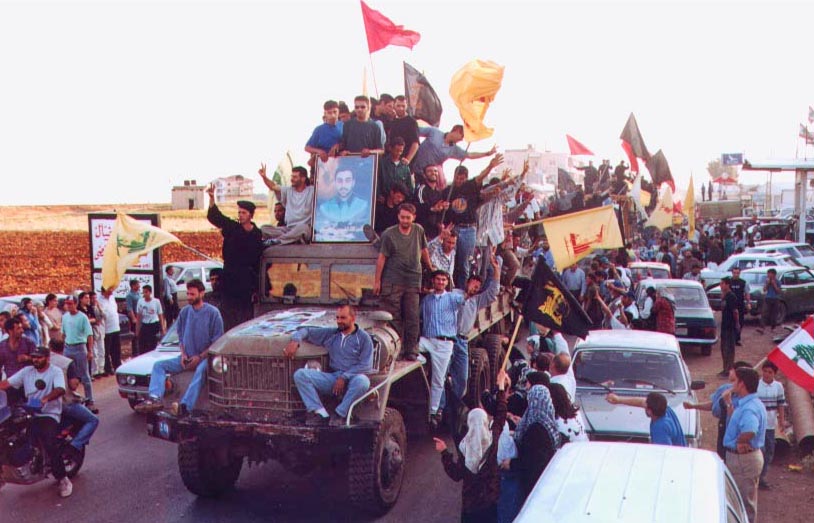
This is why I have described Israel as Hezbollah’s best enemy, and vice versa. For Hezbollah supporters, the group’s history provides a powerful narrative. The Israeli withdrawal from and subsequent liberation of southern Lebanon in 2000 remains the only example of an Arab armed movement forcing Israel to end an occupation — something that militant groups in Egypt, Syria, and Palestine have been unable to achieve.
Events in neighboring Syria have further strengthened this narrative. After the fall of the Assad regime in December 2024, the Israeli army quickly advanced into the demilitarized buffer zone in southwestern Syria which it continues to occupy to this day. Israeli forces also launched a campaign of mass bombardment to destroy large portions of the remaining Syrian military infrastructure, and declared the 1974 Israeli-Syrian disengagement agreement void.
The buffer zone borders the Golan Heights — Syrian territory that Israel has occupied since 1967 and formally annexed in 1981 (a move that most of the international community has never recognized). For Hezbollah supporters, this development will only bolster the conclusion that the same could happen to Lebanon, that Israel does not reliably adhere to territorial agreements, and that military force is the only language it respects.
This is the elephant in the room when it comes to the “land for peace” framework. Advocates could point to Israel’s withdrawal from Egypt’s Sinai Peninsula following the Camp David Accords as proof that the model can work. But Israel’s approach to Syria says otherwise.
Today, Israeli officials regularly describe the Golan Heights as permanent Israeli territory. The area has been under Israeli control for so long that Smotrich himself was born in Haspin, a settlement established there in 1978 in violation of international law.
If a future peace agreement with Syria ever materializes, few expect it to include the full return of the Golan Heights. This precedent further confirms the widespread belief in Lebanon that Israel’s territorial ambitions and drive for total domination far outweigh any commitment to long-term regional stability.
That being said, Hezbollah’s future is hardly guaranteed. The scale of Israel’s current bombardment could eventually weaken the organization significantly. Yet distrust of Israel remains strong across Lebanon, including among many who oppose Hezbollah politically.
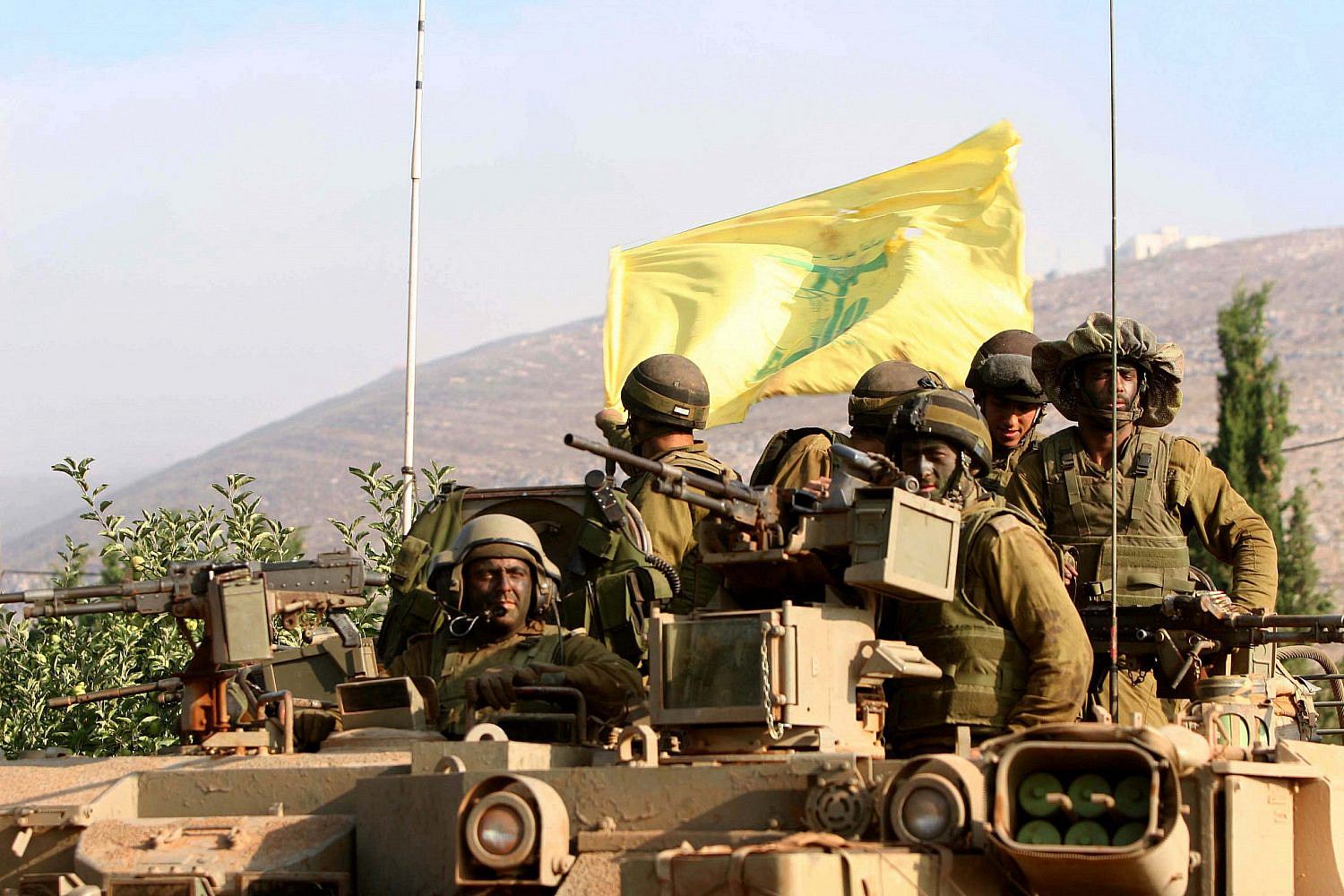
This is why even a hypothetical disarmament would not necessarily resolve the underlying tensions. If Israeli military incursions continue, new forms of resistance will likely emerge. Israel’s 18-year long occupation of southern Lebanon helped birth Hezbollah in the first place, but there is very little indication that Israeli governments have understood that lesson.
From engineering to managing chaos
Now, Israel’s renewed destruction of Lebanon is creating a humanitarian crisis at a scale not seen in decades. At the same time, there are growing fears of internal conflict, and possibly even a civil war involving Hezbollah.
In this context, it seems reasonable to conclude that Israel’s ambitions in Lebanon extend beyond weakening or eliminating Hezbollah. Prime Minister Benjamin Netanyahu has told the Lebanese to “free your country” from Hezbollah. But for many Lebanese, the situation in Iran today offers ample warning as to what this “liberation” entails.
More broadly, the Gaza genocide appears to have hardened a perception that was already widespread across the region: that Israel operates as a state in permanent search of its next war. As if to prove this point, just a week before the U.S.-Israel war on Iran began, Naftali Bennett, Israel’s former prime minister and the man hoping to replace Netanyahu after this year’s election, declared that “Turkey is the new Iran.”
In Iran, Israel may speak of regime change, but this implies a plan for what comes afterward — and no such plan appears to exist. The same lack of clarity applies to Lebanon. As Salhani told me, Israel may instead be pursuing a strategy of sustained instability. “I think Israel just wants an ongoing conflict, internal pressure, and chaos — and to see the Lebanese state collapse as much as possible.”
If that is indeed the strategy, it would prove disastrous even for Israel. A neighbouring state consumed by a permanent crisis will never be a source of security. Nevertheless, as Salhani pointed out, many in Israel’s political establishment believe themselves to be “the best suited to manage that chaos,” aspiring toward even greater regional hegemony.
With reports suggesting that Israel’s renewed war on Lebanon will continue even after it ends its bombardment of Iran, the fact remains that until this strategy is confronted by Israel’s allies, there will be no long-term prospects for peace anywhere in the region.
*Friends from Lebanon are identified using pseudonyms to protect their identity.